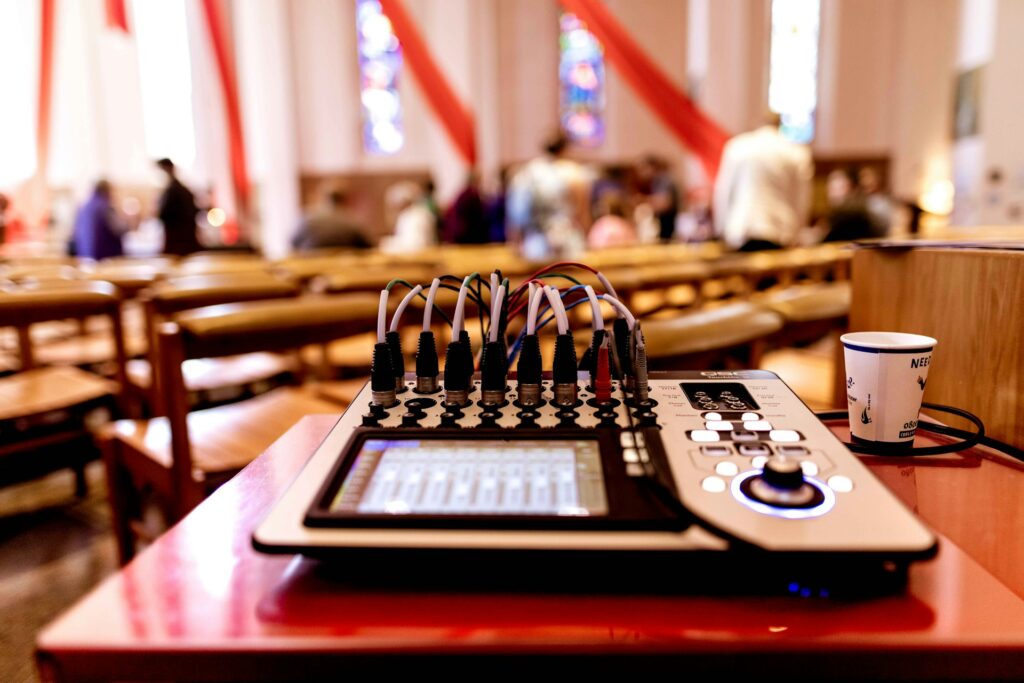
For an international event to run smoothly, the technology behind the interpreter’s voice must be almost invisible—yet completely reliable. Simultaneous interpretation equipment is a coordinated system of specialized components designed to deliver clear, real-time communication across languages.
In Guatemala, where international meetings and conferences are frequently held in hotels and professional venues, understanding how this equipment works is key to ensuring every participant receives the message with total clarity.
The Interpreter’s Environment: Booths
The interpretation booth is far more than a piece of furniture—it is a controlled workspace that allows interpreters to perform at their best.
By isolating background noise and containing the interpreter’s voice, booths ensure two critical outcomes:
- The interpreter hears the speaker with complete clarity
- The audience remains undisturbed by the interpretation process
This controlled environment is essential for maintaining accuracy and concentration throughout long sessions.
The Core System: Consoles, Mixers, and Transmission
The interpretation booth is far more than a piece of furniture—it is a controlled workspace that allows interpreters to perform at their best.
By isolating background noise and containing the interpreter’s voice, booths ensure two critical outcomes:
- The interpreter hears the speaker with complete clarity
- The audience remains undisturbed by the interpretation process
This controlled environment is essential for maintaining accuracy and concentration throughout long sessions.
The Core System: Consoles, Mixers, and Transmission
Once the interpreter processes the message, the interpreted audio must be transmitted instantly to the audience. This is where the equipment becomes essential.
Interpreter Consoles
Once the interpreter processes the message, their voice must be transmitted instantly and clearly to the audience. This is where the core technical components come into play.
Interpreter Consoles
The console is the interpreter’s control unit. It allows them to manage audio channels, switch between languages, and coordinate with other interpreters.
Key functions include:
- Channel selection: Choosing the language input and output channel
- Relay interpretation: Interpreting via another language when needed
- Audio control: Ensuring consistent, high-quality sound
Sound Mixer
The mixer balances audio from microphones, speakers, and interpretation channels. Proper sound management prevents distortion and guarantees that both the original speech and the interpretation remain clear.
RF Transmitters
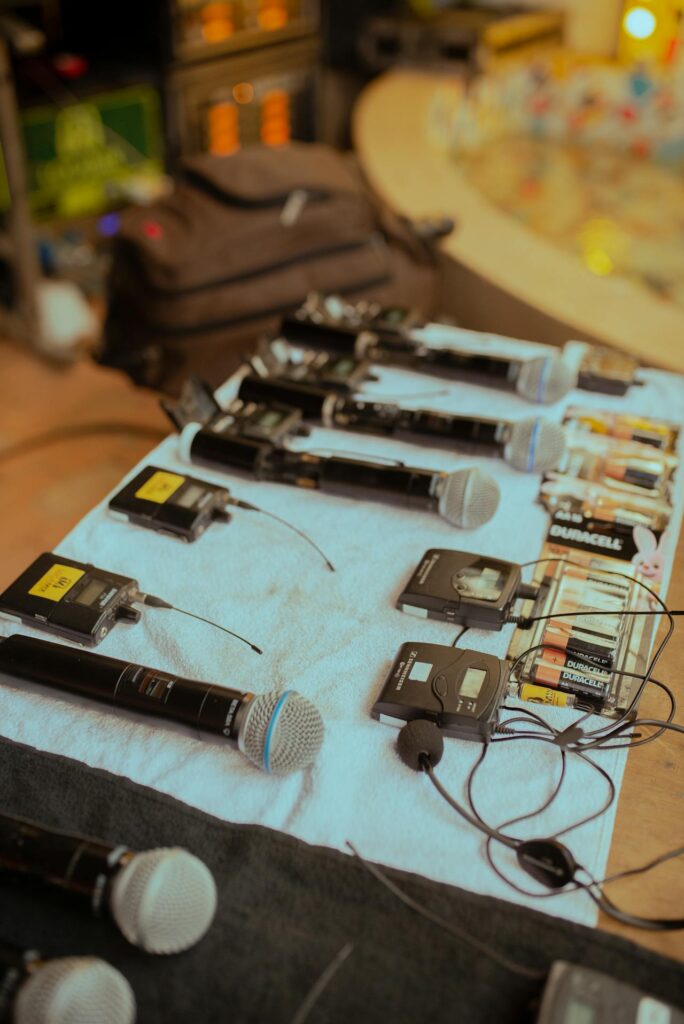
Radio frequency transmitters distribute the interpreted audio across the venue so participants can receive it through their individual receivers.
FM/RF systems are particularly effective for conferences because they:
- Cover large spaces reliably
- Maintain signal quality over distance
- Operate without dependence on internet connectivity
The Attendee Experience: Receivers and Earphones
For participants, the most visible part of the system is the portable receiver.
With a simple channel selection, attendees can listen to their preferred language in real time. High-quality receivers are designed for extended use, ensuring comfort throughout long sessions.
Key features include:
- Independent volume control for personal comfort
- Simple channel selection for ease of use
- Ergonomic earphones suitable for long periods of listening
Technical Planning and On-Site Management
Successful interpretation is not just about equipment—it’s about how that equipment is managed.
Professional providers ensure:
- Sanitized earphones between uses
- Careful frequency coordination to avoid interference
- Continuous signal monitoring throughout the event
This level of technical oversight ensures consistent performance from start to finish.
Reliability Through Redundancy
In professional interpretation, there is no margin for failure. That’s why experienced providers always plan for contingencies.
Standard safeguards include:
- Backup equipment ready for immediate use
- Uninterrupted power supply (UPS) to handle outages
- Certified systems that meet international standards
- On-site technical support for real-time troubleshooting
Flexible Solutions: Portable Equipment
Not every event requires a full setup with booth. For smaller meetings, workshops, or site visits, portable systems offer a practical alternative.
These systems include lightweight transmitters and receivers, allowing participants to move freely while still receiving clear interpretation—without complex installation.
Why the Right Equipment Matters
The success of a multilingual event depends not only on what is said, but on how clearly it is heard.
Even the best interpreters cannot deliver their full value without reliable, high-quality equipment. The right setup ensures that every participant receives the message clearly, comfortably, and in real time.
Planning an Event in Guatemala?
Choosing the right interpretation setup depends on your venue, group size, and working format.
If you’re unsure what your event requires, a technical assessment can help you avoid unnecessary costs while ensuring optimal performance.